
Lecture on Educational Cooperation Delivered at ULAB by the Chinese Director of Dhaka University Confucius Institute 达卡孔院中方院长受邀到ULAB大学作教育合作专题讲座
2026年3月8日,达卡大学孔子学院中方院长杨惠应邀访问孟加拉国自由艺术大学(University of Liberal Arts Bangladesh),为该校师生作题为“中国教育体系与中孟教育合作”的专题讲座。孟加拉国自由艺术大学校长沙姆萨德·莫图扎(Shamsad Mortuza)教授出席活动并与现场师生共同聆听讲座。

杨惠博士围绕中国教育体系的整体架构,系统介绍了从基础教育到高等教育的发展状况,重点讲解了中国在义务教育、高等教育和职业教育领域的最新进展。结合中国教育改革与国际化发展的趋势,她还分享了中国高校在人才培养、科研创新、产学研整合及国际交流方面的实践经验与成果,并详细介绍了面向国际学生的培养体系及中国政府奖学金项目,现场反响热烈。
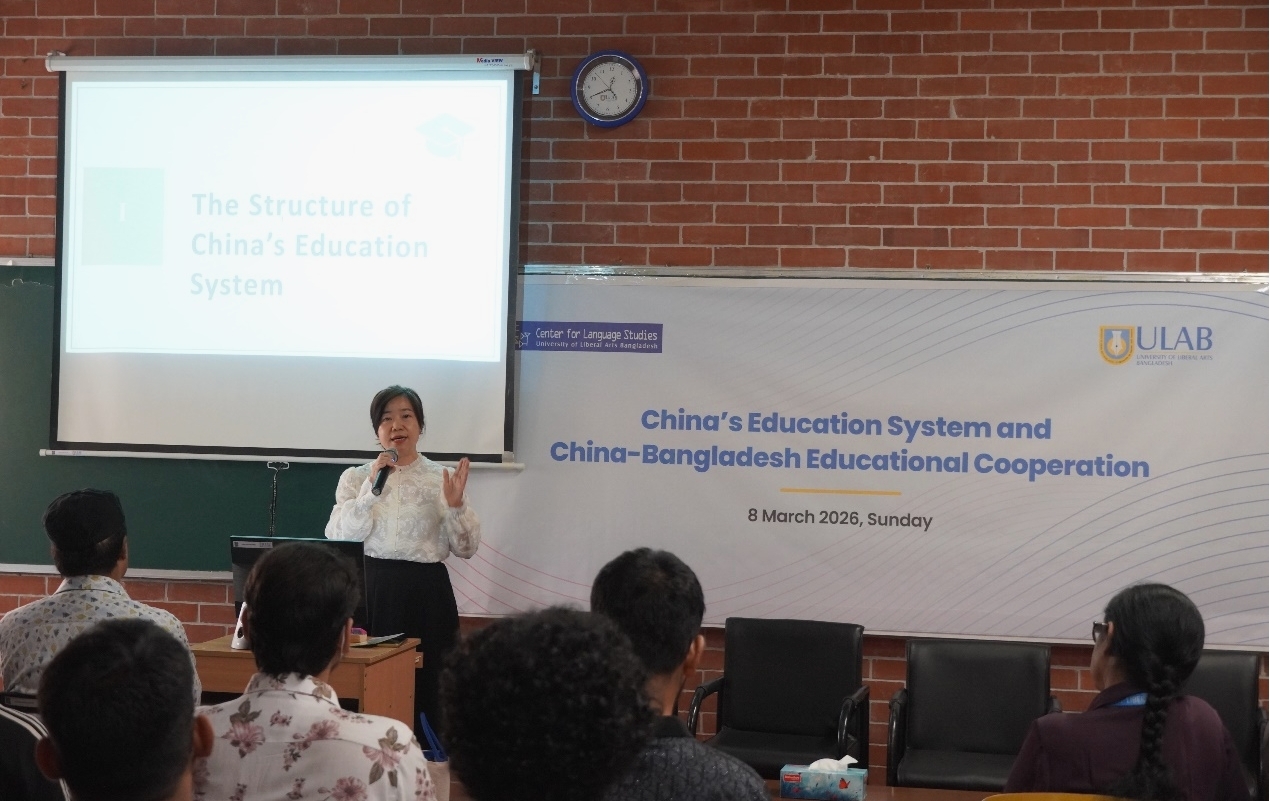
杨惠博士还梳理了中孟教育合作进展,包括孟加拉国留华学生持续增长、中文教育在孟蓬勃发展、两国高校交流日益活跃等方面。她特别介绍了在孟孔子学院发展布局,以及中文在全球的发展趋势与影响力,并提出双方在中文教育、职业教育、教育数字化等领域加强合作的建议。
在互动交流环节,杨惠博士与现场师生围绕中国留学机会、汉语学习、文化适应性、AI在教育领域的应用、以及中孟高校合作等话题展开了深入讨论。莫图扎校长对本次讲座给予高度评价,并表示,希望未来双方进一步加强教育交流与合作,推动两国高校在人才培养与学术研究等方面开展更加深入的合作。
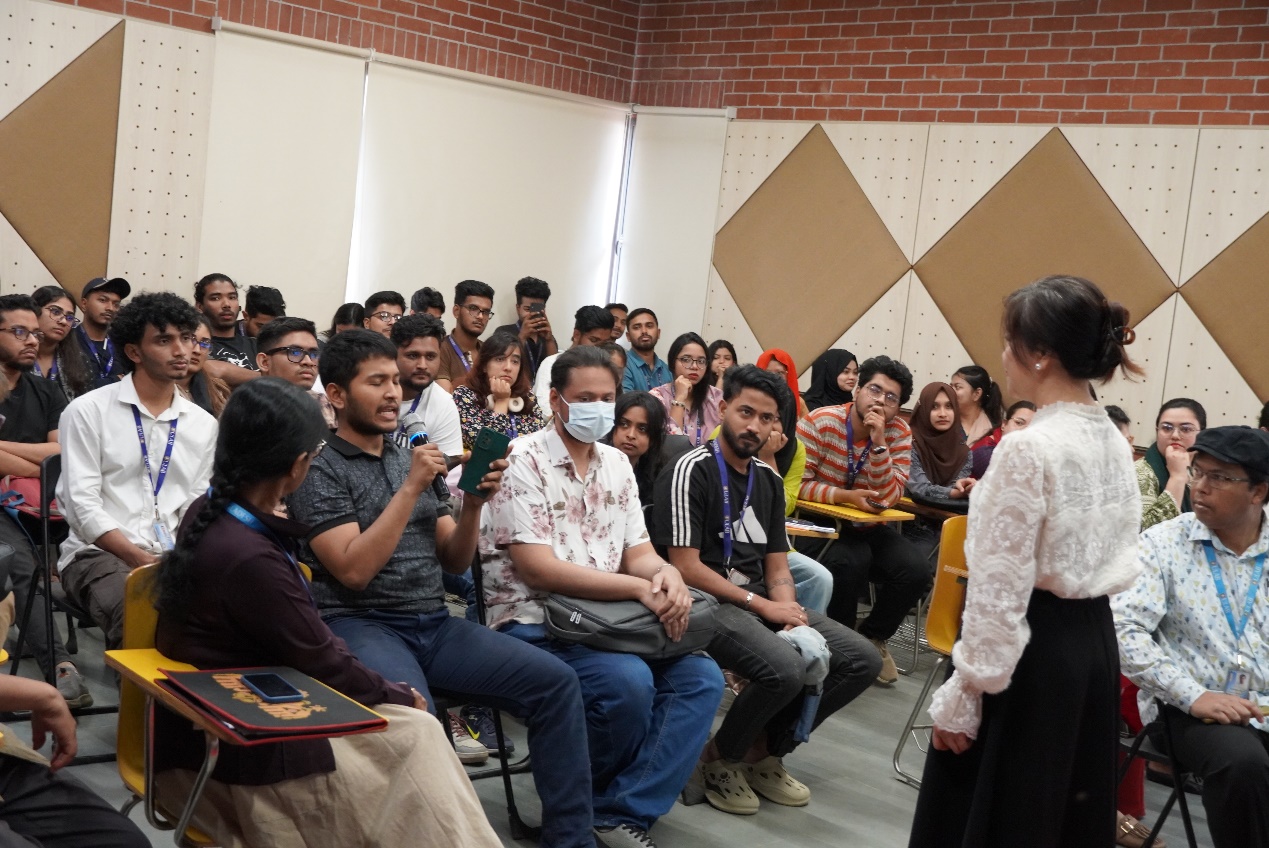
此次讲座不仅加深了孟加拉师生对中国教育体系的了解,也为促进中孟教育交流与合作搭建了良好平台。

On March 8, 2026, Dr. Yang Hui, Chinese Director of the Confucius Institute at University of Dhaka, was invited to visit the University of Liberal Arts Bangladesh (ULAB) and deliver a presentation titled “China’s Education System and China–Bangladesh Educational Cooperation.” Professor Dr. Shamsad Mortuza, Vice Chancellor of ULAB, attended the event and joined faculty members and students in listening to the lecture.
In her presentation, Dr. Yang provided a systematic overview of the overall structure of China’s education system, introducing developments from basic education to higher education. She highlighted the latest progress made in the fields of compulsory education, higher education, and vocational education in China. Drawing on the broader trends of educational reform and internationalization, she also shared practical experiences and achievements of Chinese universities in talent cultivation, scientific research and innovation, the integration of industry–education–research, and international exchange. In addition, she introduced China’s training system for international students and the Chinese Government Scholarship program, which received enthusiastic responses from the audience.
Dr. Yang also reviewed the progress of China–Bangladesh educational cooperation, noting the continuous increase in Bangladeshi students studying in China, the rapid development of Chinese language education in Bangladesh, and the growing exchanges between universities of the two countries. She further introduced the development of Confucius Institutes in Bangladesh, as well as the global development and influence of the Chinese language. She proposed strengthening cooperation in areas such as Chinese language education, vocational education, and digital education.
During the interactive session, Dr. Yang engaged in in-depth discussions with students and faculty on topics including study opportunities in China, Chinese language learning, cultural adaptation, the application of AI in education, and cooperation between Chinese and Bangladeshi universities. Vice Chancellor Prof. Mortuza highly praised the lecture and expressed his hope that both sides would further strengthen educational exchanges and cooperation, promoting deeper collaboration between universities of the two countries in talent development and academic research.
This lecture not only enhanced Bangladeshi faculty members’ and students’ understanding of the China’s education development, but also provided a valuable platform for promoting educational exchange and cooperation between China and Bangladesh.