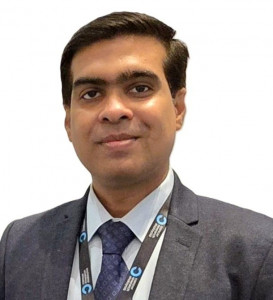
Dr. Abul Bashar Mir Md. Khademul Islam
On behalf of the Department of Genetic Engineering and Biotechnology (GEB), it is my privilege to welcome you to our department's page.
Since its founding in 2001 under the Faculty of Biological Sciences, GEB has grown into one of the country's most sought-after departments, drawing consistently from among the top-ranked students admitted to the University each year. What began as a young, single department has since matured into a full academic and research community — one whose graduates now hold positions across universities, hospitals, industry, and research institutes, both within Bangladesh and abroad.
Our academic programs are built around a simple conviction: that genetic engineering, as the most powerful tool biotechnology has to offer, deserves to be taught rigorously and applied responsibly. Students at GEB are trained not only in the fundamentals of molecular biology and genetics, but in the practical, laboratory-based skills needed to carry that knowledge into real research and real problems.
That commitment carries through into the work of our faculty, whose research spans a genuinely wide range of biotechnology's frontiers. Some are working on translational approaches to cancer, aiming to strengthen the diagnostic and treatment landscape here in Bangladesh. Others apply genomics and bioinformatics to trace the genetic and epigenetic roots of diseases such as cancer and arthritis, or to understand the genetic variants that make Bangladeshi populations susceptible to diabetes, hypertension, and cardiovascular and kidney disease. Elsewhere in the department, faculty study drug-resistant bacterial pathogens, develop tools in plant biotechnology and enzymology, and work on vaccine design, immunology, ageing, and environmental biotechnology. These works have found their way into respected international journals.
All of this research activity is anchored by our laboratories on the 5th and 7th floors of the Science Complex Building, which gives students hands-on exposure to modern techniques well before they leave the department.
None of this would be possible without the sustained effort of the people who make up GEB — our students, our alumni, our staff, and our faculty. I'm proud to be part of this community, and I look forward to building on the foundation it has already laid, as we continue working toward research and education that matters, both for Bangladesh and for the wider world.