
CIDU Chinese Director Elaborates on Importance of Chinese as a Third Language at IMLI Seminar达卡孔院中方院长在国际母语研究院研讨会上阐述中文作为第三语言教育的重要性
2026年8月25日,由孟加拉国国际母语研究院主办的“第三语言教育对孟加拉国可持续发展的重要意义”研讨会在达卡举办,教育领域专家、高校代表、语言研究机构学者齐聚现场,围绕多语种教育政策、人才培养、文化交流等议题开展研讨。
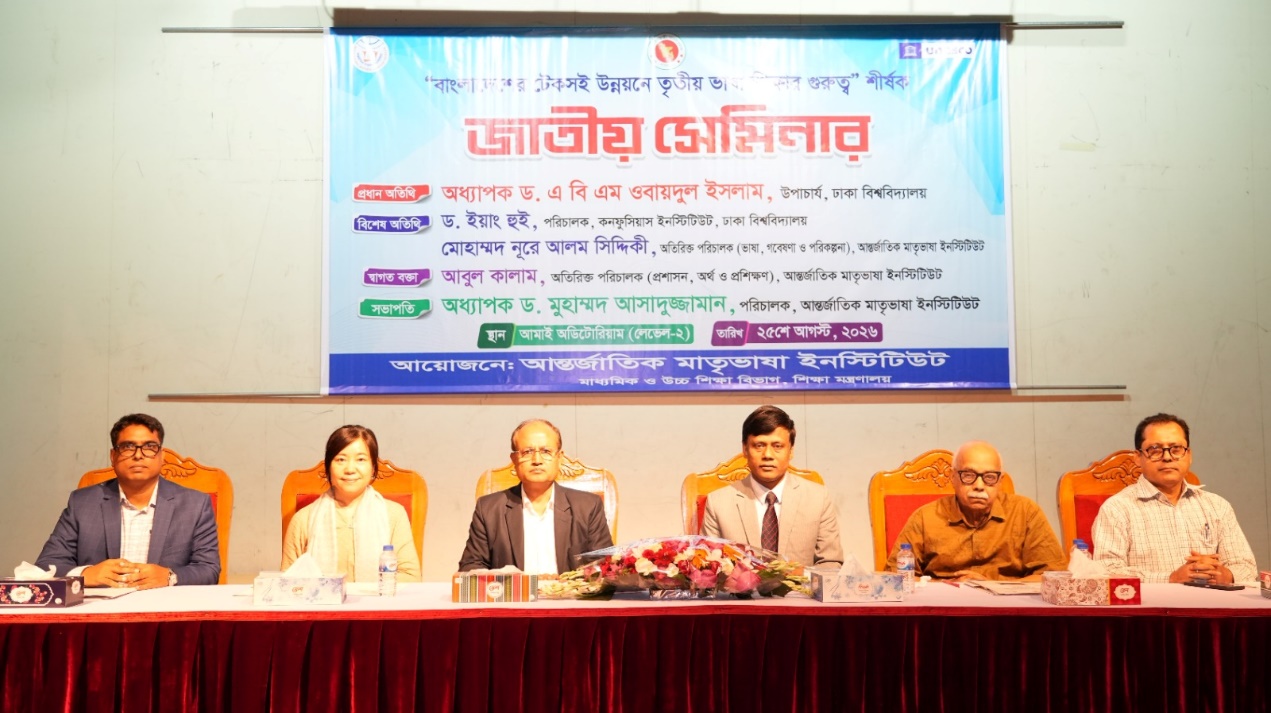
达卡大学校长奥拜杜尔教授(Prof. Dr. A.B.M. Obaidul Islam )作为主嘉宾出席活动,国际母语研究院院长阿扎杜扎曼教授(Prof.Dr. Muhammad Asaduzzaman)致欢迎辞,著名语言学家孟苏尔教授(Prof.Dr.Monsur Musa)发表主旨演讲。受主办方邀请,达卡大学孔子学院中方院长杨惠作为特邀嘉宾发表演讲,重点阐释中文作为第三语言在孟加拉国发展的价值、现状与未来实施路径。
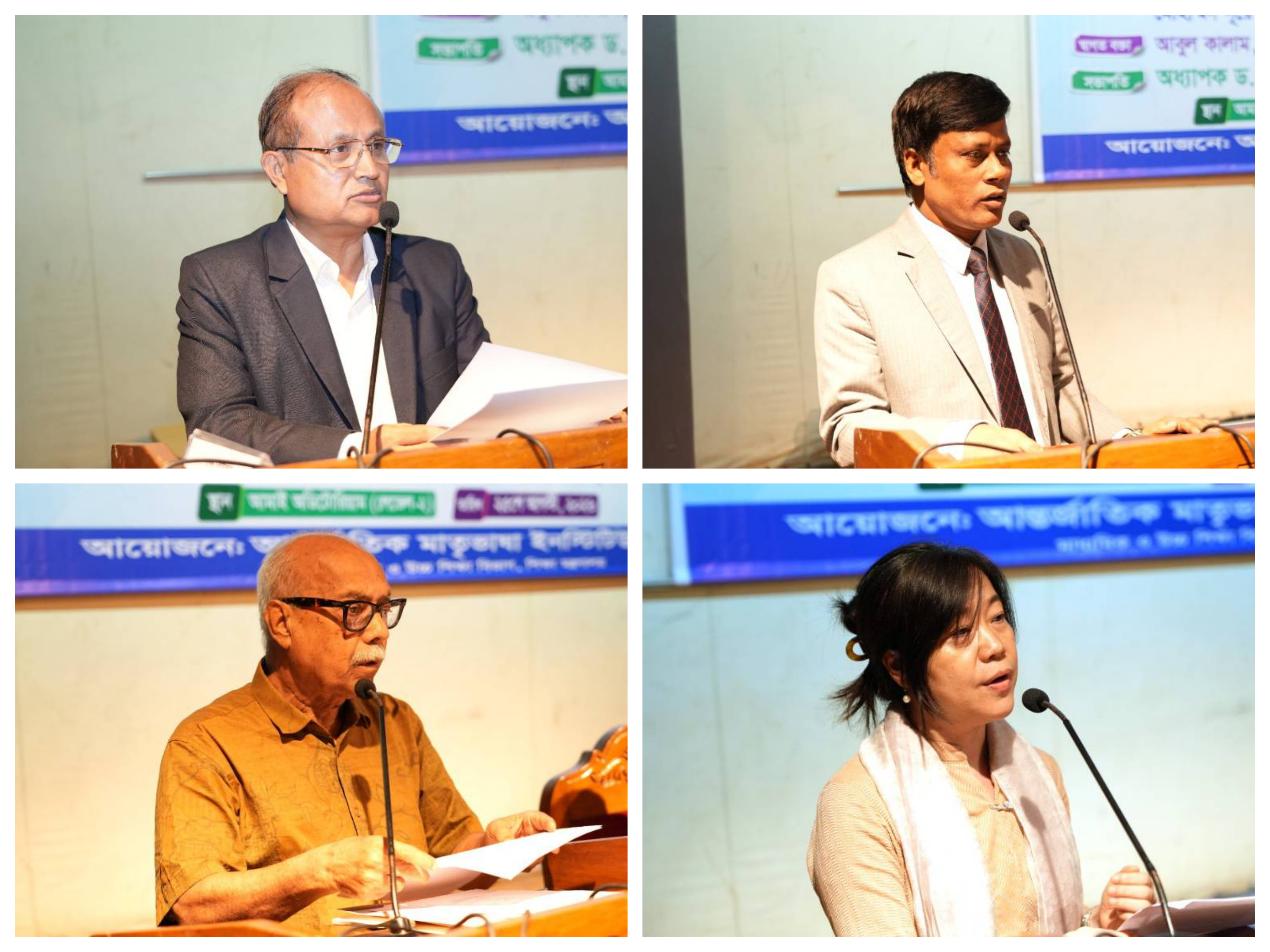
杨惠在发言中指出,语言是重要的人力资本,中文作为联合国六大官方语言之一,全球影响力持续提升,在全球经贸、科技与人文交往中发挥重要作用。她回顾了孟加拉国中文教育发展历程,介绍达卡大学自1976年开设中文课程,2016年成立达卡大学孔子学院以及建成本科、硕士完整中文学历教育体系的发展成果,提及孟中两国近期签署中文教育合作政府间协议这一重要里程碑事件。她同时客观梳理当前本土中文教师缺口、适配教材不足、城乡学习资源不均衡等现实挑战。
针对下一步发展,杨惠提出建议:坚持“母语优先、多语赋能”的教育原则,中文学习不削弱孟语、英语的基础地位;开展线上与线下并举、短期研修与长期培养相结合的培训项目,进一步加强本土中文教师队伍建设;开发“中文+商务、工程、旅游、职业技能”等复合型课程;借助数字技术弥合城乡教育鸿沟;深化双向语言与人文交流,推动中孟文学互译、青年互访,夯实民间友好根基。她表示,达卡大学孔子学院愿与国际母语研究院、孟教育主管部门、本土高校协同落实两国教育合作协议,打造可及、实用、高效的中文教育体系,助力培养兼具本土文化根基和跨语言、跨文化能力的新生代青年,助力孟加拉国将人口红利转化为人才红利,服务构建新时代中孟命运共同体。
与会嘉宾普遍认为,发展第三语言教育是孟加拉国推进可持续发展、提升青年全球竞争力的重要抓手,应当构建以母语为根基、多语种协同发展的教育模式。本次研讨会形成的观点与政策建议,将为孟加拉国制定全国多语种教育规划提供重要参考。
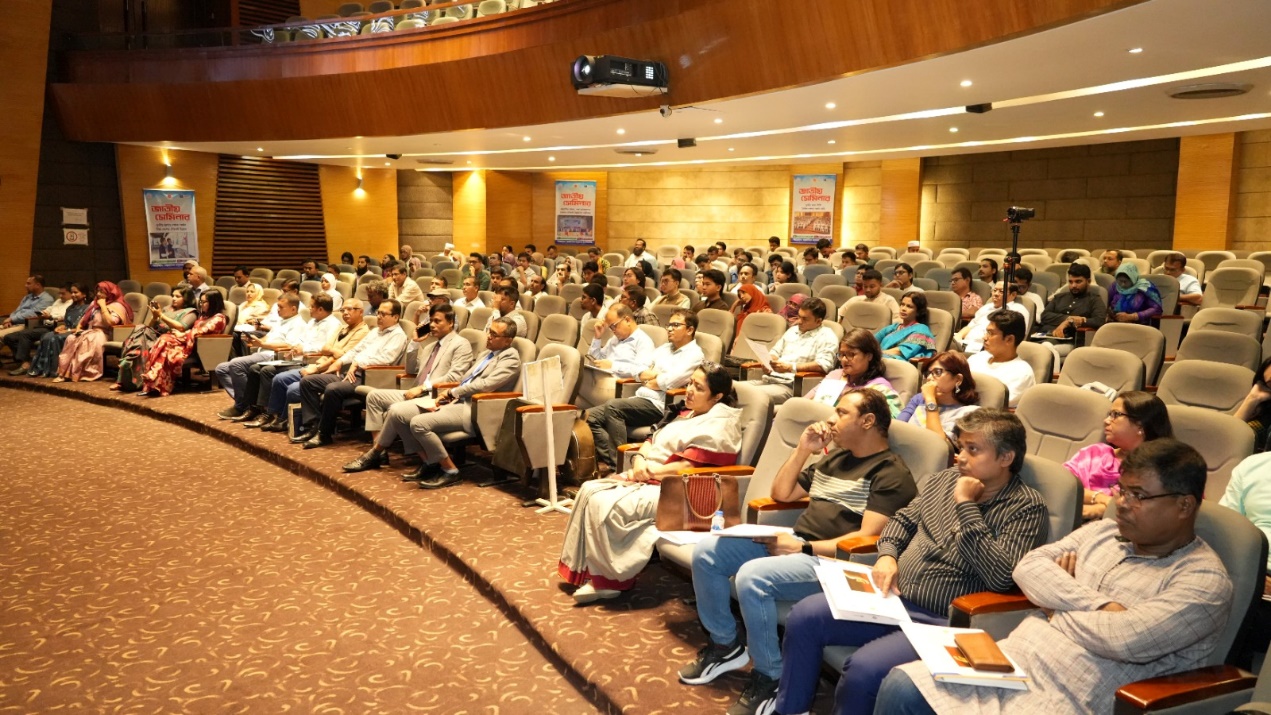
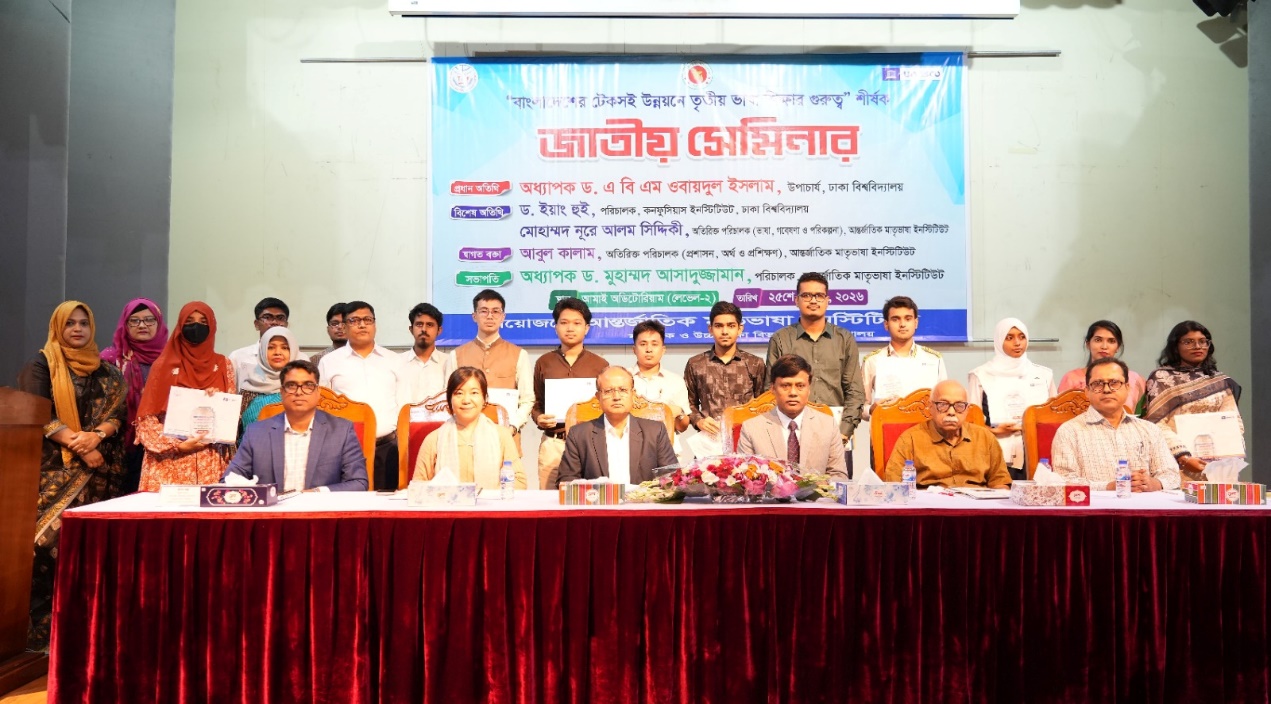
On August 25, 2026, the seminar on "The Significance of Third-Language Education for the Sustainable Development of Bangladesh," hosted by the International Mother Language Institute (IMLI) of Bangladesh, was held in Dhaka. The event brought together education experts, university representatives, and scholars from language research institutions to discuss multilingual education policies, talent development, and cultural exchange.
Professor Dr. A.B.M. Obaidul Islam, Vice-Chancellor of the University of Dhaka, attended the event as the chief guest. Professor Dr. Muhammad Asaduzzaman, Director of the International Mother Language Institute, delivered the welcome address, and renowned linguist Professor Dr. Monsur Musa gave the keynote speech. Invited as a special guest, Dr. Yang Hui, Chinese Director of the Confucius Institute at University of Dhaka, delivered a speech focusing on the value, current status, and future pathways for implementing Chinese as a third language in Bangladesh.
In her address, Yang Hui pointed out that language is an important form of human capital. As one of the six official languages of the United Nations, Chinese continues to grow in global influence and plays a significant role in international trade, science and technology, and people-to-people exchanges. She reviewed the development of Chinese-language education in Bangladesh, noting that the University of Dhaka first offered Chinese courses in 1976 and established the Confucius Institute in 2016, and has since built a complete degree-granting system for Chinese at both the undergraduate and master's levels. She also highlighted the recent signing of a bilateral intergovernmental agreement on Chinese-language education cooperation between Bangladesh and China as a key milestone. At the same time, she candidly outlined current challenges, including shortages of local qualified Chinese teachers, insufficient adapted teaching materials, and unequal access to learning resources between urban and rural areas.
Looking forward, Dr.Yang Hui put forward several recommendations: adhering to the educational principle of "mother-tongue priority with multilingual empowerment," ensuring that Chinese learning does not undermine the foundational roles of Bangla and English; strengthening the local Chinese teacher workforce through a combination of online and offline training, as well as both short-term and long-term programmes; developing integrated "Chinese plus" courses in business, engineering, tourism, and vocational skills; leveraging digital technology to bridge the urban-rural education gap; and deepening two-way linguistic and cultural exchanges by promoting literary translation and youth visits between China and Bangladesh to solidify the foundation of people-to-people friendship. She expressed that the Confucius Institute at University of Dhaka stands ready to work closely with the International Mother Language Institute, Bangladesh's education authorities, and local universities to implement the bilateral education cooperation agreement, build an accessible, practical, and effective Chinese-language education system, and help cultivate a new generation of youth who are deeply rooted in their own culture while possessing cross-linguistic and cross-cultural competence. This, she added, will support Bangladesh in transforming its demographic dividend into a talent dividend and contribute to building a China-Bangladesh community with a shared future for the new era.
Participants at the seminar generally agreed that developing third-language education is an important lever for Bangladesh to advance sustainable development and enhance the global competitiveness of its youth. A balanced educational model rooted in the mother tongue and featuring coordinated development of multiple languages should be established. The insights and policy recommendations generated at this seminar will serve as an important reference for Bangladesh's formulation of a national multilingual education plan.